
Automotive web designthat lets the product lead.
Car enthusiasts want to see the products and understand the fit. The AMT Custom Auto archive shows a product-focused storefront built around dramatic automotive visuals, featured parts and familiar vehicle brands.
The work,up close.
The supplied screenshot shows a high-contrast, black-and-red automotive website with a bright sports car hero, featured product tiles, shop-related navigation and recognizable vehicle-brand marks.
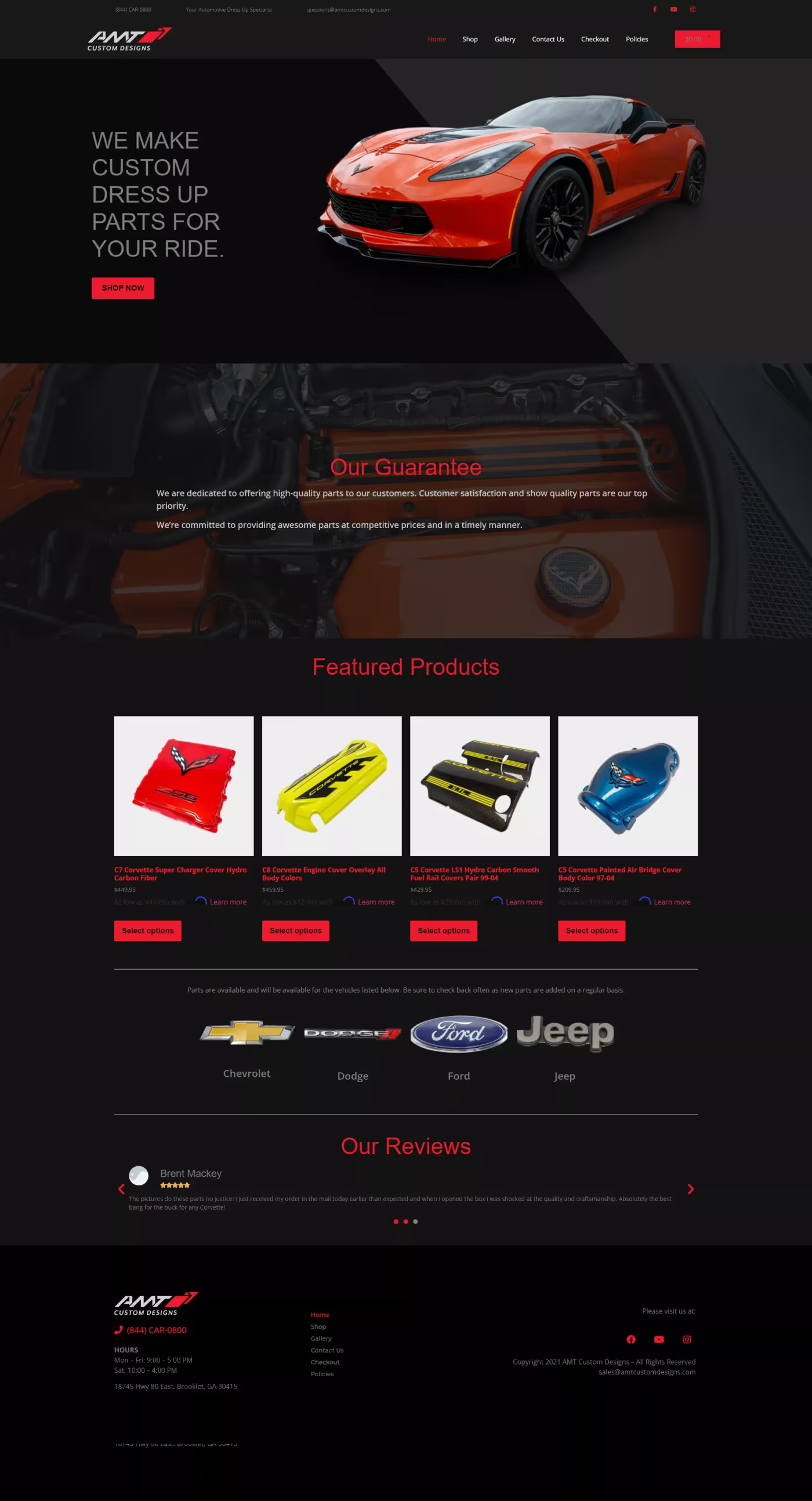
Archived automotive website with featured products, brand marks and storefront sections.
THE PROJECT STORY
An unmistakable product-first visual identity.
The first screen uses a bold sports car photograph on a dark backdrop. The red accents connect the call to action, navigation and product details, giving the experience a consistent visual rhythm.
Below the hero, the screenshot presents customization messaging and a featured-products section. Product cards are not decoration: each is an opportunity to show exactly what a shopper is considering and provide the next step.
The page also displays vehicle-brand logos. Familiar marques can help visitors orient themselves, while product categories still need accurate fitment details and up-to-date availability in a real commerce implementation.
A storefront built around scanning and selection.
The visual evidence shows a specific set of storefront patterns, not a verified transaction flow or performance report.
Lead with the car, not a paragraph.
The opening vehicle image makes the market immediately understandable. A short statement and contrasting action focus the next click.
Give product photography real space.
Featured product tiles make the parts visible at a glance. Contrast and spacing help separate product types without losing the performance-oriented visual language.
Use the brand system consistently.
Black backgrounds, red accents and compact typography connect the hero, information section, product grid and footer.
THE TAKEAWAY
Strong e-commerce design still needs useful information.
An automotive storefront benefits from high-energy photography, but clarity is what allows visitors to move from interest to selection. Real products, understandable categories and a consistent interface matter more than decorative effects.
This archive screenshot documents visible design and product presentation. It does not verify inventory integration, payment processing, customer results, conversion rates or a current live storefront.
Evidence note. This case study uses the historical AMT automotive storefront screenshot supplied by the owner. Product images and logos appear as represented in that archived design.
Explore the servicesbehind work like this.
Every business has a different brief. These are related capabilities, not an assertion that every service was provided in this project.